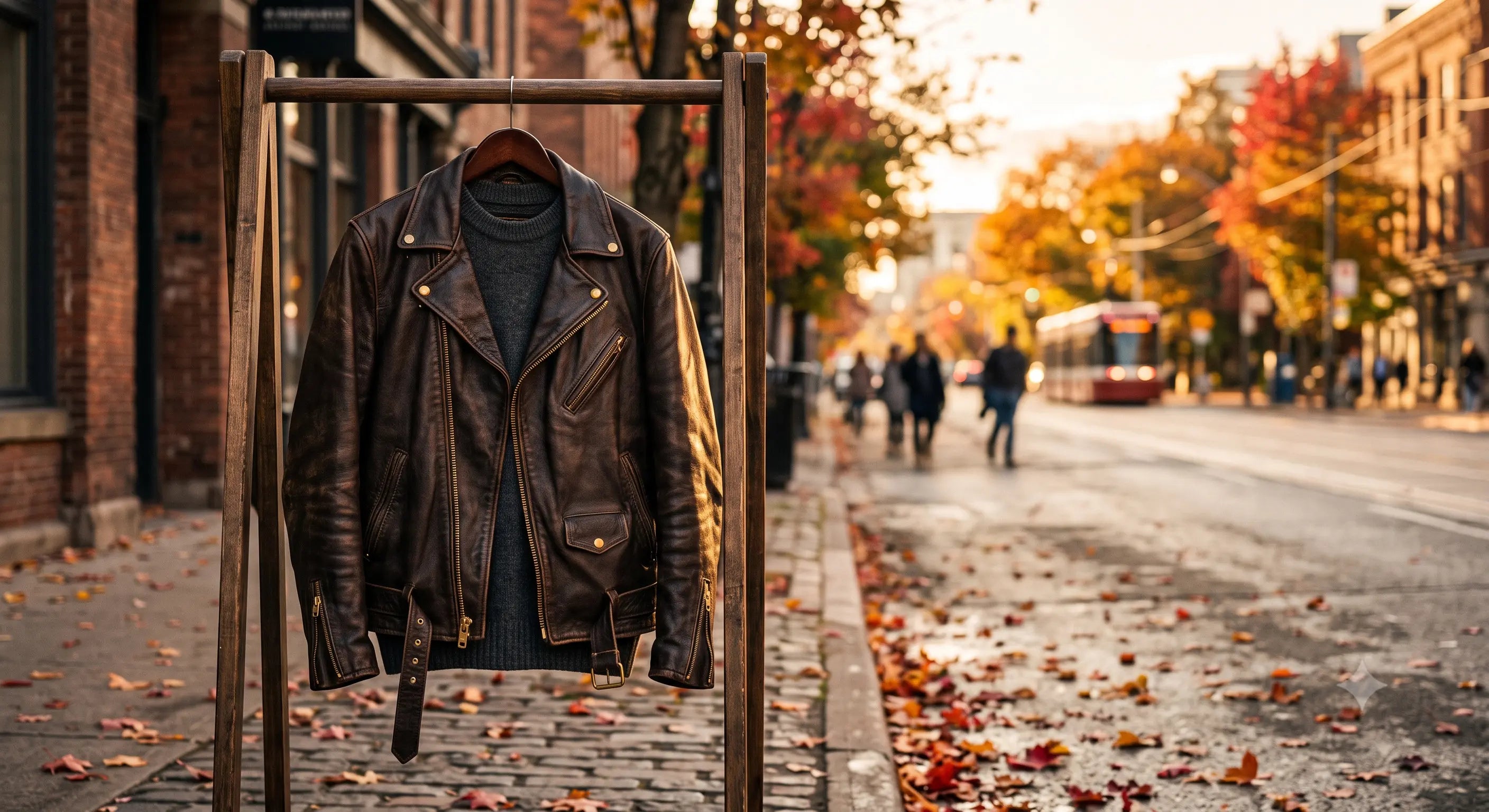
Bringing a Dried-Out Leather Jacket Back to Life
Pulled an old leather jacket out of the wardrobe and it feels like cardboard? Don't bin it. A dried-out leather jacket is usually thirsty, not dead — and long exposure to the harsh Australian sun is one of the most common culprits. With the right cleaning, conditioning, and a little patience, most stiff and faded jackets come back close to their original feel. Here's the rescue plan.

Quick Answer
Wipe the jacket clean with a damp cloth, let it dry, then apply a small amount of quality leather conditioner with a soft cloth in small circular motions. Work it in evenly, let the leather absorb it for 6 to 12 hours, then buff off any excess. Repeat once a week for 2 to 3 weeks if needed. Avoid heat, household oils, and over-applying. Most dried leather softens noticeably after the first round and fully restores after two or three.
Table of Contents
Why Leather Dries Out?

Real leather has natural oils that keep it flexible. Time, heat, sun exposure, dry air — and Australia’s hot, dry summers (December–February) are prime offenders — water exposure, and infrequent conditioning all strip those oils. The fibres tighten, the surface stiffens, and what was a soft jacket starts feeling like a board.
Drying out is reversible — up to a point. The earlier you act, the more fully the leather comes back.
Step 1: Clean the Surface

Lay the jacket flat or hang it on a wide padded hanger. Wipe the entire surface with a soft cloth lightly dampened with cool water. This removes dust, surface grime, and any old conditioner that would block fresh conditioner from absorbing.
For stubborn marks, a small amount of mild leather cleaner on the cloth works. Test on a hidden area first. Let the jacket fully air-dry — usually 1 to 2 hours — before moving to the next step.
Step 2: Apply the Conditioner

Use a quality leather conditioner — a small dedicated leather cream or wax, not household oils, mink oil overuse, or olive oil (more on that below). Put a small dab on a clean soft cloth, not directly on the jacket.
Work it in with light circular motions in small sections. Move from the shoulders down. The conditioner should disappear into the leather rather than sit on top. If it's pooling, you're using too much.
Step 3: Let It Rest

Hang the jacket on a wide padded hanger in a cool, dry, well-ventilated room. Let it absorb the conditioner for 6 to 12 hours. Don't wear it during this rest period — the leather is taking the conditioner into its fibres and movement can leave streaks.
After resting, gently buff the surface with a clean, dry microfiber cloth to remove any excess and restore a soft sheen.
Step 4: Repeat If Needed

One round is enough for mildly dry leather. Severely dried jackets often need 2 to 3 rounds, spaced about a week apart. Wait between rounds rather than over-applying — leather can only absorb so much at one time, and over-conditioning makes it greasy and flabby instead of supple.
By the third round, most rescuable jackets feel close to their original suppleness — ready for another Australian winter (June–August).
What to Avoid?
- Household oils. Olive oil, coconut oil, and vegetable oils go rancid in leather. They smell, attract dust, and damage the fibres over time.
- Heat. Hair dryers, heaters, hot parked cars, and the direct Australian sun all dry leather further. Stay cool and slow.
- Over-applying. Thick layers don't absorb — they sit on top, attract dirt, and leave the surface tacky.
- Scrubbing. Light pressure with circular motions only. Hard scrubbing damages the finish.
- Wearing too soon. Always rest the jacket between conditioning and wear.
When It's Beyond Saving
Some damage doesn't reverse:
- Surface coating that has already started peeling (common on coated "genuine leather")
- Deep cracks all the way through the leather
- Heat-warped or shrunken panels
- Heavy mildew or mould staining that survived cleaning
If your jacket shows these signs, conditioning won't fix the structural damage. A leather-specialist dry cleaner can sometimes salvage borderline cases.
Keeping It from Drying Out Again
- Condition 2 to 3 times a year — more often through hot, dry Australian summers or with heavy wear.
- Store on a wide padded hanger in a wardrobe with stable humidity (40-55%).
- Keep it out of direct sunlight and away from radiators or vents.
- Use a breathable garment cover for long-term storage. Never plastic.
- Wipe down occasionally with a dry microfiber cloth to remove dust.
Where to Go From Here?
If your jacket bounced back, you bought yourself another decade of wear with a couple of hours of work. If it didn't make it — or you discovered the surface coating wasn't real leather to begin with — browse men's leather jackets or women's leather jackets for real lambskin and cowhide options that respond to conditioning the way real leather should — with free shipping across Australia.
Final Thoughts
A dry leather jacket is one of the easiest rescues in your wardrobe — clean, condition, rest, repeat. Real leather wants to be flexible. It just needs the oils put back. Treat it right once or twice a year and the next dried-out moment never comes.
Frequently Asked Questions
How can I tell if my leather jacket is dry?
What's the best conditioner for a dried-out leather jacket?
Can olive oil restore dry leather?
How often should I condition a leather jacket?
Will conditioning darken the colour of my leather jacket?
Can a vintage leather jacket be brought back?
About Author:
John Austin is an expert contributor with 5+ years in the leather industry, blending precise care tips with cutting-edge fashion advice.