The Disposable Fashion Problem: Why Your Jacket Peels

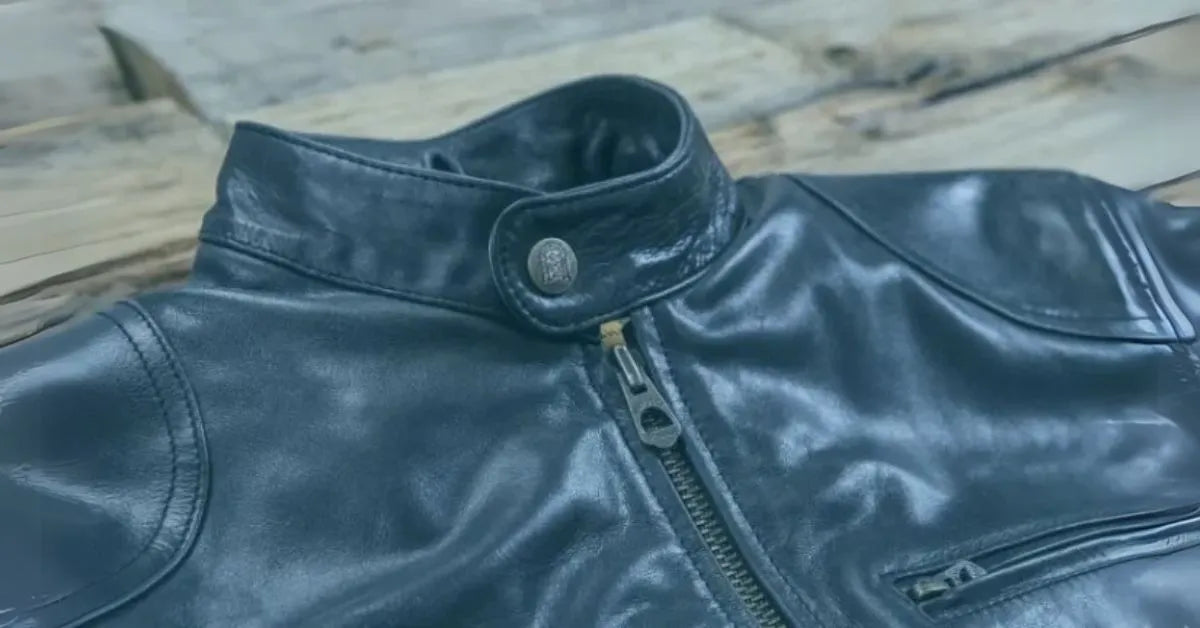
It always happens the same way. You wear the jacket through one good Melbourne winter, maybe two. Then a small flake comes off the cuff. A few weeks later, the elbows are shedding. By spring, the surface is cracking like dry paint. Your "leather" jacket isn't dying it was built to. This is what disposable fashion actually looks like up close, and it's worth understanding before you buy your next one.
Quick Answer
Most "leather" jackets peel because they aren't really leather on the surface. They're either bonded leather (shredded leather scraps glued together) or split-grain leather coated with a thin polyurethane finish. The plastic coating cracks under daily flexing and starts flaking off. Real full-grain or top-grain leather from a reputable maker doesn't peel because there's no coating to peel the surface is the leather.
Table of Contents
- What's Actually Peeling Off Your Jacket
- The Disposable Fashion System Behind It
- Peeling Jacket vs. Real Leather Jacket
- The Real Environmental Cost
- Why "Cheap" Is the Most Expensive Option
- How to Avoid Buying Another Peeler
- Breaking the Cycle
- A Better Way to Buy
- Final Thoughts
- Frequently Asked Questions
What's Actually Peeling Off Your Jacket
The flakes coming off your jacket are not leather. They're polyurethane a thin synthetic coating sprayed over weak, low-grade leather (or sometimes no leather at all) to make it look smooth, glossy, and uniform on the rack.
That coating works for a few months. Then it starts to dry out, loses elasticity, and cracks every time the jacket bends at the elbows, the cuffs, the inside of the collar, the spots that flex most. Australian conditions accelerate it: harsh UV in summer, damp winter commutes, hot parked cars. Once the surface cracks, it lifts. Once it lifts, it peels. There's no fixing it because there's nothing to repair the coating back to. The shredded scraps or split hide underneath were never meant to be the visible surface.
If you want to see the difference between real and coated leather before you buy, our guide on identifying a real leather jacket shows you what to look for in product photos and product descriptions.
The Disposable Fashion System Behind It
Peeling isn't a manufacturing accident. It's a feature of how disposable fashion is priced.
To hit a rock-bottom retail price, a brand has to compress every cost: cheaper hides (or no hide at all), faster chrome tanning, lower-grade thread, machine-pressed seams, plastic linings, and a polymer coating that hides the compromises. Even at that low cost, the brand still expects to sell another jacket to the same customer in two years. The short lifespan is the business model, not a defect.
The math works for the seller. It rarely works for the buyer. You replace the jacket two or three times in the same period a real leather jacket would still be ageing quietly in your wardrobe.
Peeling Jacket vs. Real Leather Jacket
The differences look small on a product page. They're huge on a five-year timeline:
| Trait | Cheap Coated Jacket | Real Leather Jacket |
|---|---|---|
| Surface | Polyurethane coating over scraps or split hide | Top of the hide, untouched or lightly buffed |
| Aging | Cracks, peels, flakes | Develops patina, softens with wear |
| Lifespan | 1 to 3 years | 10 to 20 years with basic care |
| Repairable | No, once peeling starts it spreads | Yes, conditioning, restitching, professional restoration |
| End of life | Landfill (plastic + bonded fibres don't biodegrade cleanly) | Often passed down or resold |

The Real Environmental Cost
This is where the disposable fashion problem gets bigger than your wardrobe. A polyurethane-coated jacket is essentially a plastic garment with leather fragments inside. When it peels, those plastic flakes shed during wear and washing. When you throw it away, it goes to landfill where the bonded fibres and PU coating can take decades to break down, leaching chemicals as they go.
Multiply that by the millions of cheap leather lookalikes sold each year and the math is grim. Buying a jacket designed to last a decade and actually wearing it for that decade is one of the simplest sustainability decisions in a wardrobe. Not because real leather is perfect, but because not throwing things away is the lowest-impact thing any of us can do. We dig into the trade-offs honestly in The Sustainable Side of Leather.
Why "Cheap" Is the Most Expensive Option
The disposable jacket isn't just bad for the planet, it's bad math.
A cheap coated jacket worn 30 times before it cracks costs you several dollars per wear. A real lambskin jacket worn three times a week for five years costs you pennies per wear. By year three, the cheap jacket has been replaced twice and you've spent more than the better option would have cost you on day one. We work through the full math in our cost-per-wear breakdown.
Disposable fashion's pitch is "you save money." Once you trace the lifecycle, it's the opposite.
How to Avoid Buying Another Peeler
The best filter is what's not on the listing:
- If the listing only says "genuine leather" with no grade or hide named, expect coating and expect peeling.
- If the price looks too good to be true and the listing is vague, the math doesn't work for real full-grain or top-grain leather. Something's been cut.
- If the surface looks plastic-perfect in close-ups no pores, no slight grain irregularity, no faint marks, that's a coating, not a hide.
- If the brand won't talk about sourcing, that's usually because the answer wouldn't help them. Brands proud of their leather make a point of explaining where it comes from.
- If the smell is more chemical than leather when it arrives, that's the polymer coating talking.

Breaking the Cycle
Buying out of disposable fashion isn't about spending more. It's about spending once. A real lambskin or cowhide jacket from a direct-to-consumer brand costs less than two replacements of a peeling fast-fashion jacket. You can also extend any leather jacket's life with simple care: condition it twice a year, store it on a wide hanger, keep it out of the harsh Aussie sun and never leave it in a hot car.
The shift is mostly mental: stop thinking of a jacket as something you replace every couple of years. Start thinking of it as something you keep.
A Better Way to Buy
If your last jacket peeled, you didn't pick wrong because you were careless. The system is set up to push coated leather as "real leather" and bury the difference in the listing. Once you know how to read product pages, you stop buying into it.
Browse a curated set of full-grade options in our men's leather jackets or women's leather jackets collections free shipping across Australia, from Darwin to Hobart or read our take on eco-conscious leather jackets if sustainability is the lead reason you're rethinking the next purchase.
Final Thoughts
A jacket that peels is telling you something. It's telling you that what you bought wasn't really what you thought it was, and that the brand who sold it to you was counting on you replacing it soon. The fix isn't a more expensive jacket it's a better-informed one. Real leather, named hide, named grade, transparent sourcing. Buy that once and the disposable cycle ends quietly, with a jacket you'll still be wearing in a decade.
Frequently Asked Questions
Why is my leather jacket peeling after only a year?
Can a peeling leather jacket be repaired?
Do all leather jackets eventually peel?
Is faux leather more sustainable than real leather?
How much should I spend to avoid a peeling jacket?
What's the most sustainable choice in leather outerwear?